




:quality(80)/p7i.vogel.de/wcms/18/c0/18c07c769db4df3a950fb887719265dc/general-fusion-lm26-7008x3940v1.jpeg "General Fusion nutzt multiphysikalische Simulationen, um das Verhalten seiner Fusionsdemonstrationsanlage zu analysieren und zu optimieren. (Bild: General Fusion)")
:quality(80)/p7i.vogel.de/wcms/d9/e0/d9e0a52ace6a70cb7f40b6647ea634a7/p90642837-highres-bmw-group-and-mistra-2573x1447v1.jpeg "BMW kann auf einen historischen Datensatz aus virtuellen Crashsimulationen von mehr als einem Petabyte zugeifen und damit sein industrielles KI-Modell trainieren. (Bild: BMW)")
:quality(80)/p7i.vogel.de/wcms/eb/0e/eb0ebbc439b9156460b875564800346b/pexels-markusspiske-9858904-1613x908v1.jpeg "Der Jahresbericht des Deutschen Patent- und Markenamts (DPMA) zeigt eine deutlich steigende Dynamik bei Patentanmeldungen, insbesondere in der Batterietechnik. (Bild: )")
:quality(80)/p7i.vogel.de/wcms/89/c9/89c911ebddb1646a110a82e7e9900eae/manufacturing-20-26-20industrial-2-1450x816v1.png "Eine digitale Konstruktion schafft noch keinen digitalen Prozess. Manuelle Übergaben zwischen Konstruktion, Vertrieb und ERP verhindern dies und werden zunehmend zu Wachstumsproblemen. (Bild: Emporix)")
:quality(80)/p7i.vogel.de/wcms/6e/35/6e3563e715be749a19ceacd881c438b9/fachbeitrag-tda-inventor-pdm-2730x1536v1.png "Drei Tage für eine Variante, die sich hätte automatisieren lassen: Warum manuelle Konstruktionsprozesse heute keine Option mehr sind. (Bild: Lino GmbH)")
:quality(80)/p7i.vogel.de/wcms/13/b3/13b3ddeb15a89dd2312ebfcf5a137edd/0131474896v2.jpeg "Frustrierend: Rund 40 Prozent der Zeit von Elektrokonstrukteuren entfällt auf die Suche nach Komponenten, die Erstellung und Pflege von Dokumentation sowie die Korrektur wiederkehrender Fehler. Hier kann künstliche Intelligenz Entlastung schaffen. (Bild: WSCAD GmbH)")
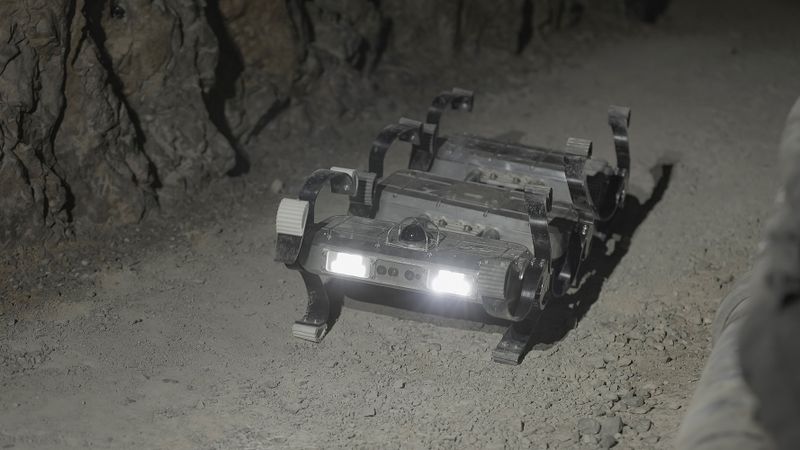
:quality(80)/p7i.vogel.de/wcms/48/5c/485ca913e75a5858337faf4f55099c20/newsimage422125v1.jpeg "The Scout Rover of the DLR in action in the ridge tunnel at the Schneefernerhaus. (Image:Erlend Hellerslien / DLR)")
:quality(80)/p7i.vogel.de/wcms/3e/1e/3e1e17bf8bae7e5208cc9d3d6966d2b4/nick-the-photographer-water-5967218-1920-1920x1080v1.jpeg "Die IP-Schutzart macht unter anderem deutlich, wie stark ein Produkt vor Berührung mit Spritzwasser geschützt ist. (Bild: Nick_the_Photographer)")
:quality(80)/p7i.vogel.de/wcms/56/e8/56e8e3795f0143046743769c710be5dd/newsimage422125-1776x1000v1.jpeg "Der Scout Rover des DLR im Einsatz im Kammstollen am Schneefernerhaus. (Bild: Erlend Hellerslien / DLR)")
:quality(80)/p7i.vogel.de/wcms/5f/3d/5f3ddce3220ba9afb5c44823eec66211/mac0010563-rgb-3344x1882v1.jpeg "Das Sensorsystem USi-Safety umfasst zwei Ultraschallwandler zum Anschluss an zwei unabhängige Kanäle, die jeweils EN ISO 13849 Kategprie 3 PL d erfüllen. (Bild: Pepperl+Fuchs)")
:quality(80)/p7i.vogel.de/wcms/f9/f3/f9f33992aefaad5894296a5f60e415ce/z9379-s58x8fsx-fsoe-clamping-fs-ethercat-enc-std-grp-cmyk-4134x2325v1.jpeg "Die neue Encoder-Generation von Kübler bietet Technologien wie EtherCAT und FSoE und integrierte Cyber-Security-Funktionen. (Bild: Kübler Group)")
:quality(80)/p7i.vogel.de/wcms/70/2d/702d0de3a5b4cba0a0b512077cc58c75/bild1-3356x1888v1.jpeg "Die Umsetzung der zweiten Version des Robo Pack Systems hat Joke Mechanix mit ASi Lösungen von Bihl+Wiedemann realisiert. (Bild: Bihl+Wiedemann)")
:quality(80)/p7i.vogel.de/wcms/a0/03/a003d1d5ee83399f232303f7c50bd93b/geralt-statistics-4623842-4752x2672v1.jpeg "Erholung mit Risiken: Deutschlands Wirtschaft zwischen geopolitischer Unsicherheit und technologischem Aufschwung. (Bild: )")
:quality(80)/p7i.vogel.de/wcms/aa/e1/aae1d4890329b20e40f4ebbc782705c7/aussenhandel-saisonbereinigt-2048x1151v1.png "Im April 2026 sind die deutschen Exporte gegenüber März 2026 kalender- und saisonbereinigt um 0,9 Prozent und die Importe um 1,2 Prozent gestiegen. (Bild: Destatis)")
:quality(80)/p7i.vogel.de/wcms/0c/a8/0ca87f2101343b426f8a2efa3f7ed80b/adobestock-1979349822--c2-a9-20deni-20-e2-80-93-20stock-adobe-com-ki-generiert-4093x2304v1.jpeg "Ingenieure sind das entscheidende Bindeglied für KI im Praxiseinsatz. Sie bringen das essenzielle Wissen mit, KI-Modelle zu trainieren, einzuschätzen und richtig anzuwenden. (Bild: © deni – stock.adobe.com | KI-generiert)")
:quality(80)/p7i.vogel.de/wcms/09/2a/092ad24dd4b603abc12e017024d5be85/digitalerzwillingjoseph-von-fraunhofer-20-282-29-6200x3489v1.jpeg "Auf der Hannover Messe 2026 konnten sich Besucher mit dem digitalen Zwilling von Joseph von Fraunhofer unterhalten – das Metaverse und KI machen es möglich. (Bild: Fraunhofer-Gesellschaft)")
:quality(80)/p7i.vogel.de/wcms/2f/2b/2f2b46d8cd0987790d053a0ecc434833/aumovio-pp-dtco-1-1772x997v1.jpeg "20 Jahre digitaler Tachograph: Wie sich das Gerät vom Kontrollgerät zum Datenhub im Güterverkehr entwickelt hat. (Bild: )")
:quality(80)/p7i.vogel.de/wcms/bf/45/bf4523ff21e3add62ccd8390c5bfea7a/adobestock-726557427--c2-a9-20vladan-20-e2-80-93-20stock-adobe-com-ki-generiert-3580x2016v1.jpeg "Astronomie erforscht die Welt der Galaxien und versucht, Entstehung, Aufbau und Entwicklung des Universums zu erklären. (Bild: © Vladan – stock.adobe.com_KI-generiert)")
:quality(80)/p7i.vogel.de/wcms/bc/49/bc4957f73a884d8ee1356914659cf2f4/adobestock-325234002--c2-a9-20karyna-20-e2-80-93-20stock-adobe-com-5490x3087v1.jpeg "Riesenräder sind mehr als eine Attraktion, sie sind ein Symbol für technologischen Fortschritt. (Bild: © Karyna – stock.adobe.com)")
:quality(80)/p7i.vogel.de/wcms/50/8c/508ccaa2f4a61a0fecf84fde16ba45aa/schrittmotor-nema-24-erklaerung-und-anwendungen-die-sie-kennen-solltenv1.jpeg "Die Parametrierung und Inbetriebnahme des Integrierten Motors ST NEMA24 von item Industrietechnik erfolgen komfortabel mit der Software item MotionSoftStepper (Bild: item)")
:quality(80)/p7i.vogel.de/wcms/a1/64/a16493ce8f1e75a27e82aba33532b391/lineartechnik-einfach-erklaert-definition-vorteile-anwendungv1.jpeg "Lineartechnik kommt überall dort zum Einsatz, wo geführte Bewegungen entlang einer Achse erforderlich sind. Das item Linearsystem bietet die Basis für Einzelachsen, Synchronachsen sowie Mehrachsportale. (Bild: item)")
:quality(80)/p7i.vogel.de/wcms/45/8a/458add2ba48d38497829522cac80bbae/reinraum-fuer-pharma-medizintechnik-7-herausforderungen-und-wie-sie-sie-loesenv1.jpeg "Arbeiten unter Reinraumbedingungen: In der Pharma- und Medizintechnik sind kontrollierte Umgebungen eine zentrale Voraussetzung für sichere Produktionsprozesse. (Bild: item)")
Stand: 08.12.2025
Es ist für uns eine Selbstverständlichkeit, dass wir verantwortungsvoll mit Ihren personenbezogenen Daten umgehen. Sofern wir personenbezogene Daten von Ihnen erheben, verarbeiten wir diese unter Beachtung der geltenden Datenschutzvorschriften. Detaillierte Informationen finden Sie in unserer Datenschutzerklärung.
Einwilligung in die Verwendung von Daten zu Werbezwecken
Ich bin damit einverstanden, dass die Vogel Communications Group GmbH & Co. KG, Max-Planckstr. 7-9, 97082 Würzburg einschließlich aller mit ihr im Sinne der §§ 15 ff. AktG verbundenen Unternehmen (im weiteren: Vogel Communications Group) meine E-Mail-Adresse für die Zusendung von redaktionellen Newslettern nutzt. Auflistungen der jeweils zugehörigen Unternehmen können hier abgerufen werden.
Der Newsletterinhalt erstreckt sich dabei auf Produkte und Dienstleistungen aller zuvor genannten Unternehmen, darunter beispielsweise Fachzeitschriften und Fachbücher, Veranstaltungen und Messen sowie veranstaltungsbezogene Produkte und Dienstleistungen, Print- und Digital-Mediaangebote und Services wie weitere (redaktionelle) Newsletter, Gewinnspiele, Lead-Kampagnen, Marktforschung im Online- und Offline-Bereich, fachspezifische Webportale und E-Learning-Angebote. Wenn auch meine persönliche Telefonnummer erhoben wurde, darf diese für die Unterbreitung von Angeboten der vorgenannten Produkte und Dienstleistungen der vorgenannten Unternehmen und Marktforschung genutzt werden.
Meine Einwilligung umfasst zudem die Verarbeitung meiner E-Mail-Adresse und Telefonnummer für den Datenabgleich zu Marketingzwecken mit ausgewählten Werbepartnern wie z.B. LinkedIN, Google und Meta. Hierfür darf die Vogel Communications Group die genannten Daten gehasht an Werbepartner übermitteln, die diese Daten dann nutzen, um feststellen zu können, ob ich ebenfalls Mitglied auf den besagten Werbepartnerportalen bin. Die Vogel Communications Group nutzt diese Funktion zu Zwecken des Retargeting (Upselling, Crossselling und Kundenbindung), der Generierung von sog. Lookalike Audiences zur Neukundengewinnung und als Ausschlussgrundlage für laufende Werbekampagnen. Weitere Informationen kann ich dem Abschnitt „Datenabgleich zu Marketingzwecken“ in der Datenschutzerklärung entnehmen.
Falls ich im Internet auf Portalen der Vogel Communications Group einschließlich deren mit ihr im Sinne der §§ 15 ff. AktG verbundenen Unternehmen geschützte Inhalte abrufe, muss ich mich mit weiteren Daten für den Zugang zu diesen Inhalten registrieren. Im Gegenzug für diesen gebührenlosen Zugang zu redaktionellen Inhalten dürfen meine Daten im Sinne dieser Einwilligung für die hier genannten Zwecke verwendet werden. Dies gilt nicht für den Datenabgleich zu Marketingzwecken.
Recht auf Widerruf
Mir ist bewusst, dass ich diese Einwilligung jederzeit für die Zukunft widerrufen kann. Durch meinen Widerruf wird die Rechtmäßigkeit der aufgrund meiner Einwilligung bis zum Widerruf erfolgten Verarbeitung nicht berührt. Um meinen Widerruf zu erklären, kann ich als eine Möglichkeit das unter https://contact.vogel.de abrufbare Kontaktformular nutzen. Sofern ich einzelne von mir abonnierte Newsletter nicht mehr erhalten möchte, kann ich darüber hinaus auch den am Ende eines Newsletters eingebundenen Abmeldelink anklicken. Weitere Informationen zu meinem Widerrufsrecht und dessen Ausübung sowie zu den Folgen meines Widerrufs finde ich in der Datenschutzerklärung, Abschnitt Redaktionelle Newsletter.
:quality(80)/p7i.vogel.de/wcms/56/e8/56e8e3795f0143046743769c710be5dd/newsimage422125-1776x1000v1.jpeg "Der Scout Rover des DLR im Einsatz im Kammstollen am Schneefernerhaus. (Bild: Erlend Hellerslien / DLR)")
:quality(80)/p7i.vogel.de/wcms/ac/e9/ace94c258b6b0ddb0705807f3d8368b5/image-1920-1383e7af198d85cc4e83024513c3c2f3-1920x1079v1.jpeg "Die umgebaute Dornier 328-100 wird zum Test nachhaltiger Flugzeugtreibstoffe für die umweltverträglichere Luftfahrt der Zukunft eingesetzt. (Bild: DLR)")